PROBLEM: CYBERSECURITY POSTURE
General security may find risk, but can't fix exposure.
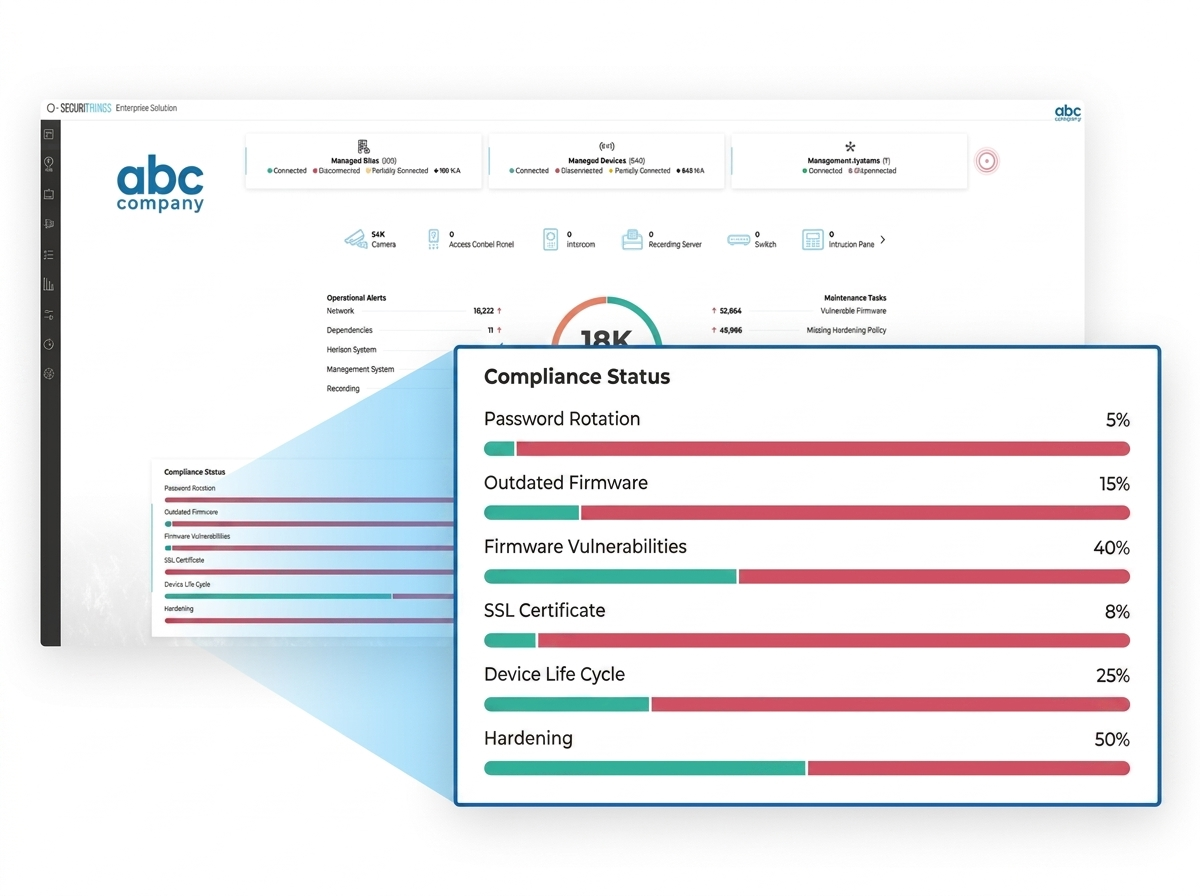
Default credentials, expired certificates, and outdated firmware are the device-level exposures that generic security tools see poorly and cannot act on.
A specific attack surface that general tools miss
The device-level exposure is specific, and it accumulates quietly across a large, multi-vendor fleet:
The result: the exposure is device-specific, and generic network tools were not built to see it.
That gap shows up the moment a device gets flagged:
The result: flagged does not mean fixed.
The exposure is already widespread, and the gap is where risk lives
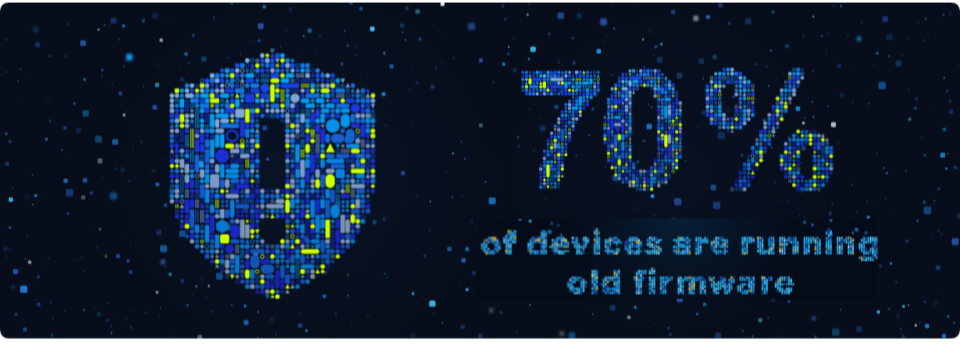
70%
30-40%
Just 3%
of security teams are fully confident their current tools can address outdated firmware, weak passwords, and end-of-life devices.
Most tools might see the exposure but cannot act on it
Detection tools
Treat security and IoT devices as generic network endpoints. They can tell you an IP is responding, not that a camera needs a specific firmware path, cert renewal, or credential rotation.
Vendor-by-vendor remediation
Every vendor added means another credential scheme, another firmware mechanism, another quirk. There is no universal patch, so the fix stays manual and device by device.
Solving this takes more than detection. It takes:
HOW WE SOLVE IT
Remediation built for how these devices actually work
SecuriThings remediates at the device level. Not just flagging a vulnerable device, but executing or guiding the fix, credential rotation, certificate renewal, or firmware push, in a way that fits how these devices are actually operated.
That closes the gap between who sees the risk and who can act on it: the team that owns the device gets the means to fix it directly, without waiting on a different team's tooling or access.
AI-Powered Device Issue Rememdiation
The Agentic Device Orchestrator is the layer that makes this scale across a multi-vendor fleet.
It coordinates remediation across devices, tools, and teams, with a human holding the reins rather than software acting on its own. You stay in control of what runs and when.
What remediation at scale looks like
In its first 90 days, one data center customer ran 6,137 firmware upgrades and 3,512 password rotations across a rapidly growing fleet, with every new device governed from day one.
"We are saving thousands of man-hours a year while dropping vulnerability rates and reducing password rotation from weeks to minutes." — Technology and design leader, global software company
NEXT STEP: PLATFORM PREVIEW
See your fleet as it actually is
Upload your device list and we will run it through the platform, mapping real CVEs, EOL/EOS dates, and patch availability against your actual fleet.
- Vulnerability exposure by severity CVE breakdown across your fleet
- Device lifecycle status — EOL/EOS dates mapped to your actual devices
- Patch availability — what's remediable and what isn't
- Executive summary — ready to share with IT and security leadership