
Skip to content

PROBLEM: Compliance

Compliant on audit day isn't the same as compliant every day.

Every connected device answers to a different rulebook, and most compliance records are true on audit day and unproven every other day.

THE CORE PROBLEM

The rules multiply as the estate grows, and no one system tracks them.

Compliance obligations pile up device by device, and the reasons are structural:

Compliance Complexity Each device answers to a different rulebook: NDAA 889, HIPAA, SOC 2, ISO 27001, NERC CIP, PCI.  
Facility, Not Device Which rule applies depends on the facility, not the device: a camera in a hospital inherits HIPAA.  
Scattered Evidence Evidence lives in separate consoles: cameras here, building controllers there, rack sensors elsewhere.  

The result: no single system maps device state to the rules that apply.

fedb565e-2f33-4c9e-aabd-a2fc62e2778b

That gap shows up every time an audit lands:

Outdated on Arrival The picture is out of date by the time it is assembled.  
One Day Only A snapshot proves one day; the obligation is every day.  
It Only Takes One One banned-vendor device or one unrotated credential can fail the check.  

The result: teams prove compliance for a moment, not as a continuous state.

Everyone knows compliance matters; almost no one trusts their tools to deliver it.

75%

of security teams call keeping devices compliant with security and IT requirements a top or high priority.

Just 2%

are fully confident their current tools can manage device health and compliance at scale.

76%

say limited automation for routine compliance tasks is where their current tools fall short.

The Verdict?
The obligation is nearly universal and the confidence is nearly absent.

Most reporting proves a point in time; compliance is 24/7/365

Point-in-time reporting

accurate on audit day, unproven every other day. Device state drifts the moment the report is filed.

Per-vendor, siloed tools

each console covers its own devices in its own silo. None maps device state across the estate to the regulation that applies.

Solving this takes more than a report. It takes:

Device state mapped to what actually applies: HIPAA, PCI, SOC 2, NERC CIP, NDAA 889.
One verified inventory across every system, not a manual assembly per audit.
A record that holds up on any day, not just audit day.

HOW WE SOLVE IT

Device state mapped to the rules, recorded continuously.

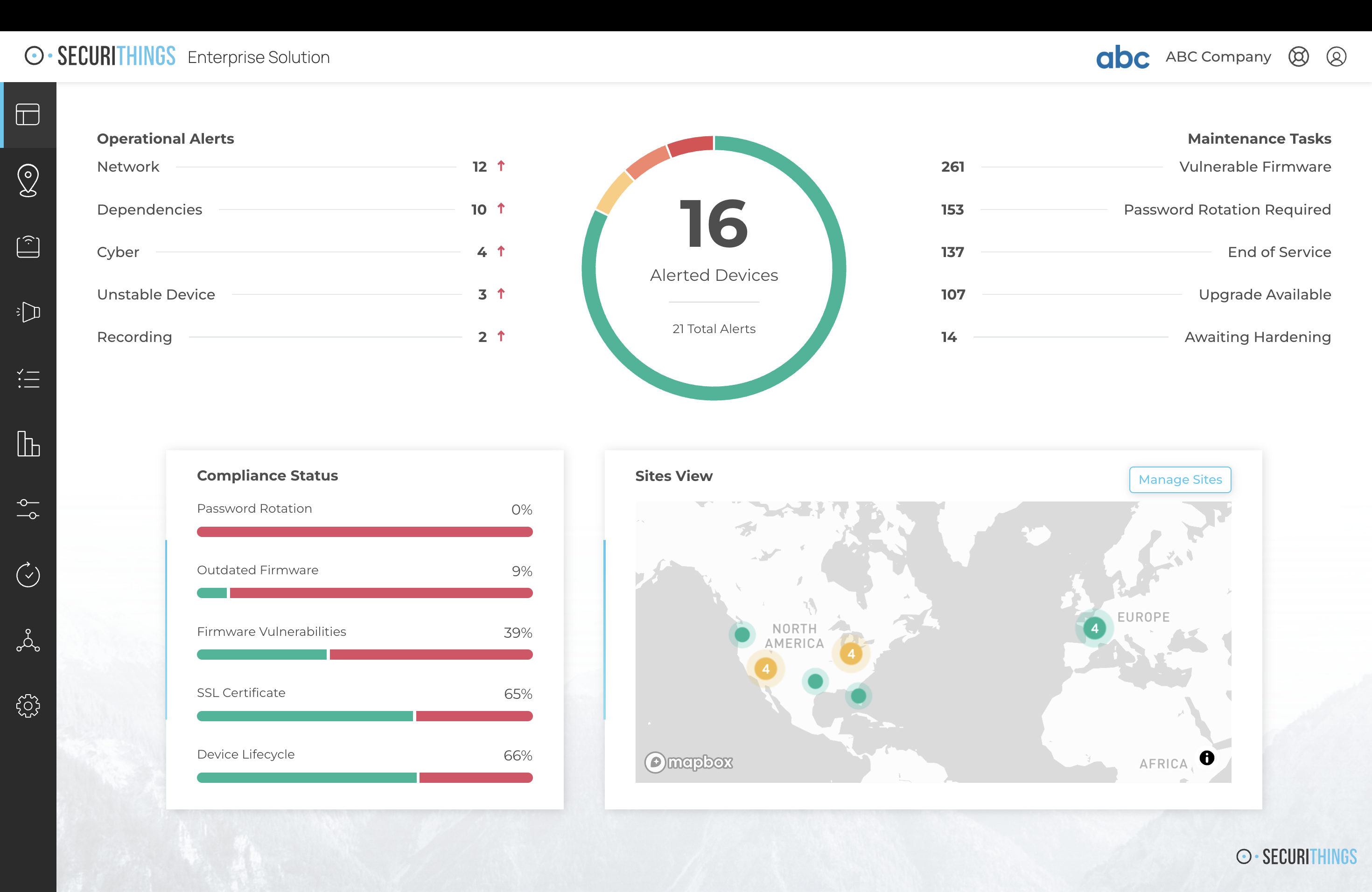
SecuriThings maps device state against your policies and regulations, across the full estate. One live inventory, so attestation reflects reality, not a manual assembly.

IT and security set the standard. The team running the system, physical security, facilities, or IT, executes on the devices they operate. The platform supports that division, rather than assuming one team owns everything.
Op Mgmt
PROOF OF VALUE

What audit-ready looks like when it is continuous

One transportation and logistics customer lifted device compliance from 15% to 98% by automating firmware, passwords, and certificates across their fleet.


"We are saving thousands of man-hours a year while dropping vulnerability rates and reducing password rotation from 45 days to just 60 minutes."
— Technology and design leader, global software company


NEXT STEP: PLATFORM PREVIEW

See your fleet as it actually is

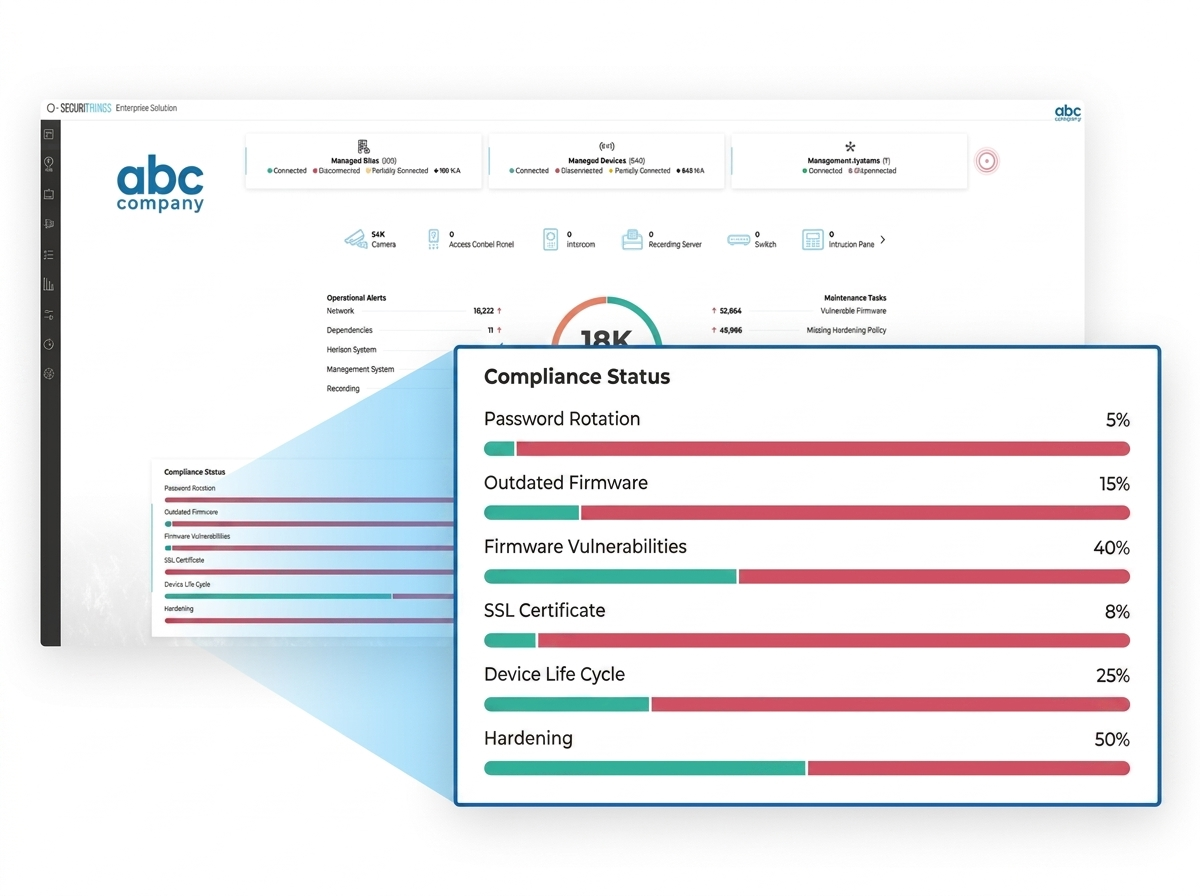
Upload your device list and we will run it through the platform, mapping real CVEs, EOL/EOS dates, and patch availability against your actual fleet. 

  • Vulnerability exposure by severity CVE breakdown across your fleet
  • Device lifecycle status — EOL/EOS dates mapped to your actual devices
  • Patch availability — what's remediable and what isn't
  • Executive summary — ready to share with IT and security leadership
Platform Preview 1